How My Music Background Helped Me Name My New Business
May 13, 2024—Naming a business is hard! Here's the story of Sonata Insights.
A sonata is a musical composition for a solo instrument (or sometimes two instruments), usually with piano accompaniment. Sonatas—and classical music—were a big part of my life for many years (band and orchestra geek? check).
From Clarinet to Oboe
In 5th grade, I started learning the clarinet. Soon, there were 30 10- and 11-year-olds squeaking away in the band. I was good enough to be first chair—the section leader—but practically every week someone was challenging me in a "play-off" to take my spot.
After two years, I was tired of defending my turf. So when my 7th grade band director asked if anyone was interested in playing the oboe, I said yes - even though I had no clue what an oboe was. I just wanted to do something that 30 other people weren't also doing.
🎵 Short PSA: The oboe is a double-reed instrument that looks a bit like a clarinet. It helps tune the orchestra.
Switching to the oboe was one of the first times I can remember where I knew I wanted to be where other people aren't, and it’s feeling that has been a foundation of my career. I introduced the marketing world to interactive media when I was an editor at Ad Age. I helped chronicle the start of the dotcom era as an editor at The Industry Standard magazine. And at eMarketer, I put social media on the map for marketers because I was paying attention to college students.
The oboe, as it turns out, is one of the most difficult instruments to play. But one thing they don't tell you is that if you want to be really good, you have to make—by yourself—the thing that basically determines how your instrument sounds: your oboe reed. A small piece of cane wood, folded and bound with twine onto a small tube and then scraped down with a small knife until it's perfect. Or until you scrape too hard and a chunk of your reed goes flying across the room, and you need to start over.
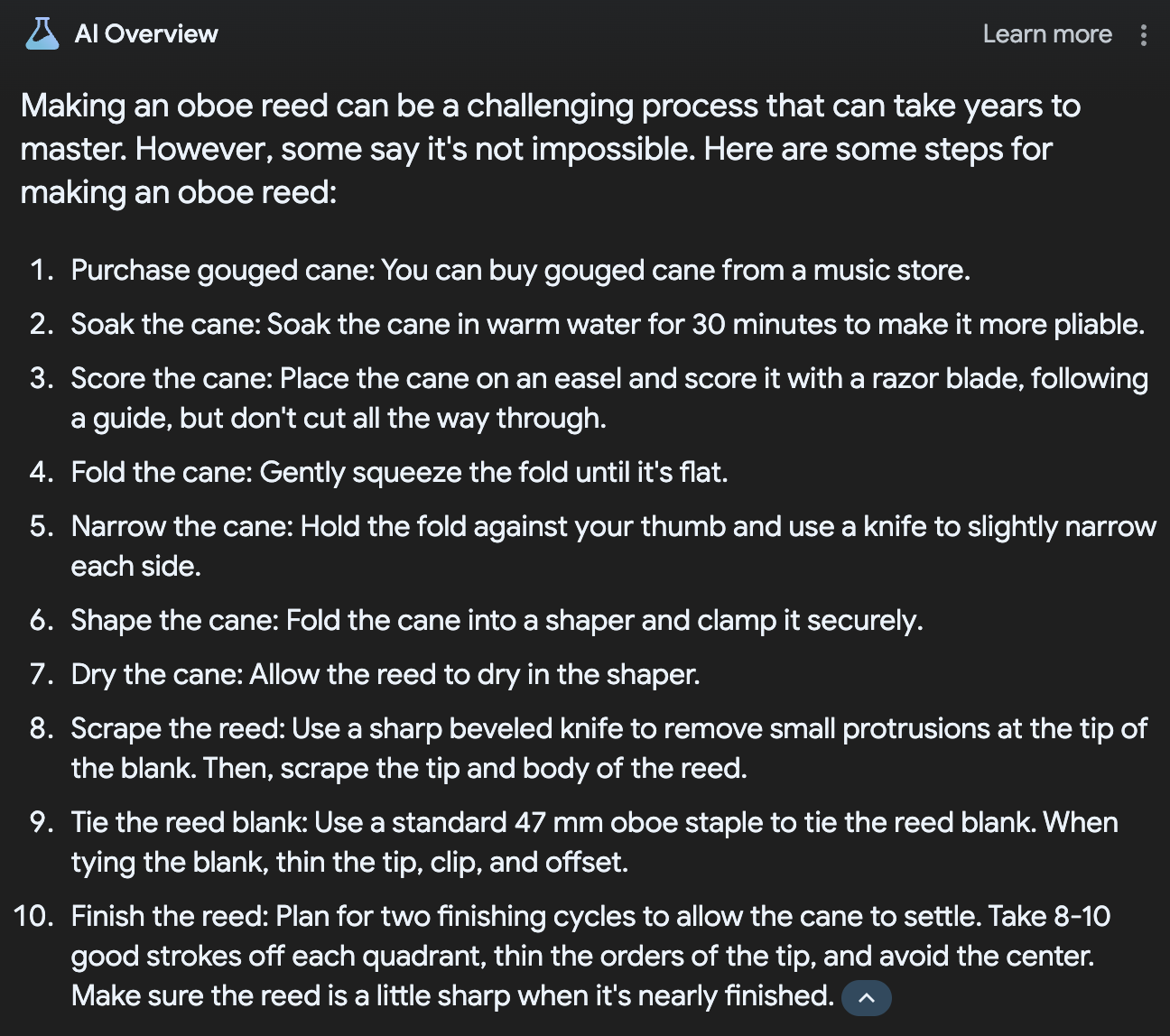
How Google’s AI describes making an oboe reed
It’s mostly accurate, except the last two steps can take hours.
By the time I got to the end of high school, I knew I wanted to study music in college—and keep making those damn reeds. I also had a passion for literature, so I ended up at Northwestern, where I could get a double degree in music and English.
My Business Approach: The Sonata
I loved playing in orchestras at Northwestern, but what really touched my heart was playing a sonata.
In a sonata, the instruments must interweave melodies, and they must share the same emotion, musicality and expression.
When I started to think about what to name my business, I knew I wanted to approach my client projects the same way:
➡️ Deep collaboration
➡️ Active listening
➡️ Close partnership
I gave up playing the oboe years ago, but the discipline and drive it took to learn how to make reeds and master the instrument—as well as the collaboration, listening and partnership skills I learned by playing sonatas—are the foundation of Sonata Insights’ business approach.
Here’s my favorite oboe sonata, by Francis Poulenc, performed by my oboe professor Ray Still.
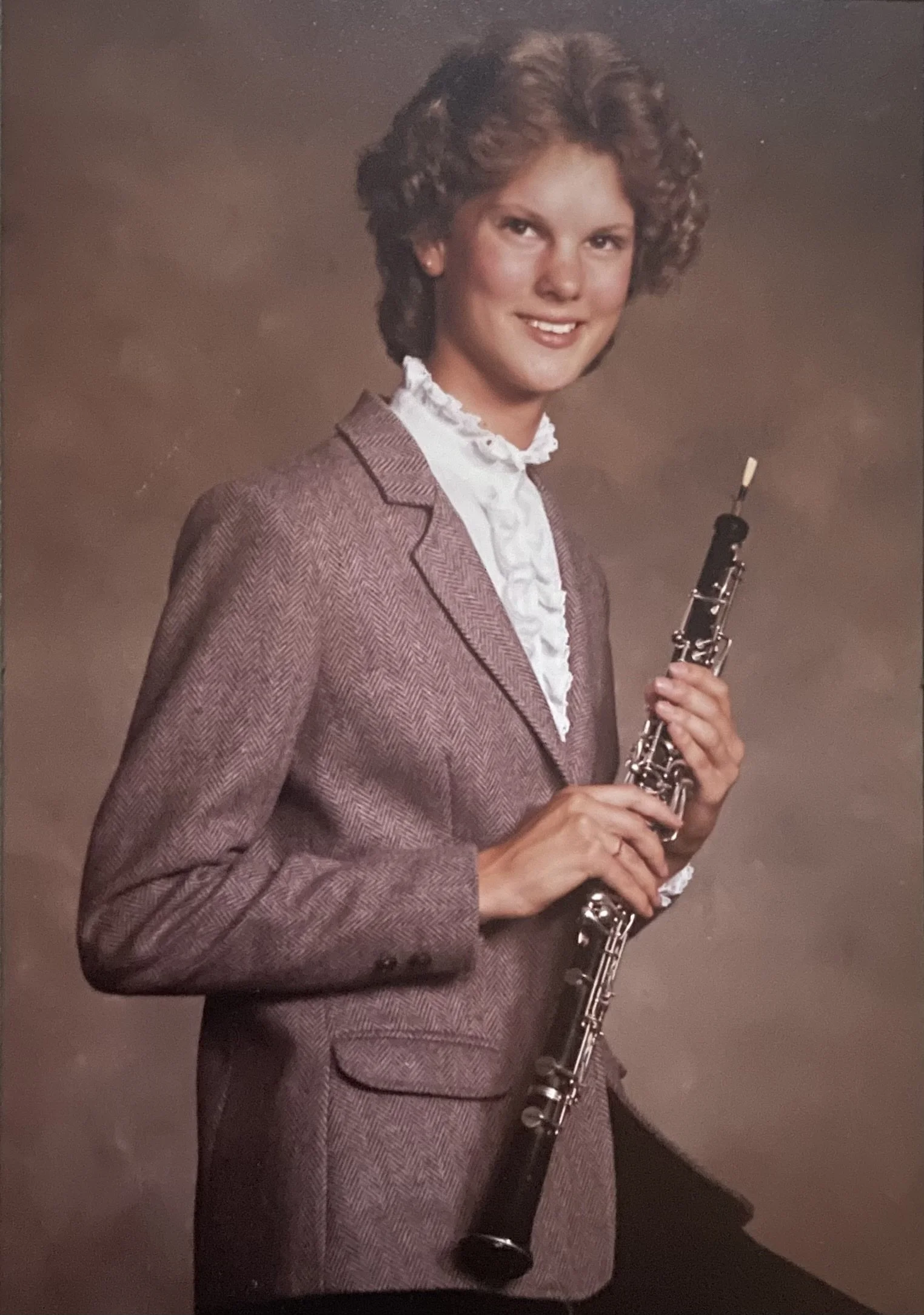
And here’s me in high school.